



Interactive Self-Service Kiosk Experience
Interactive Self-Service Kiosk Experience
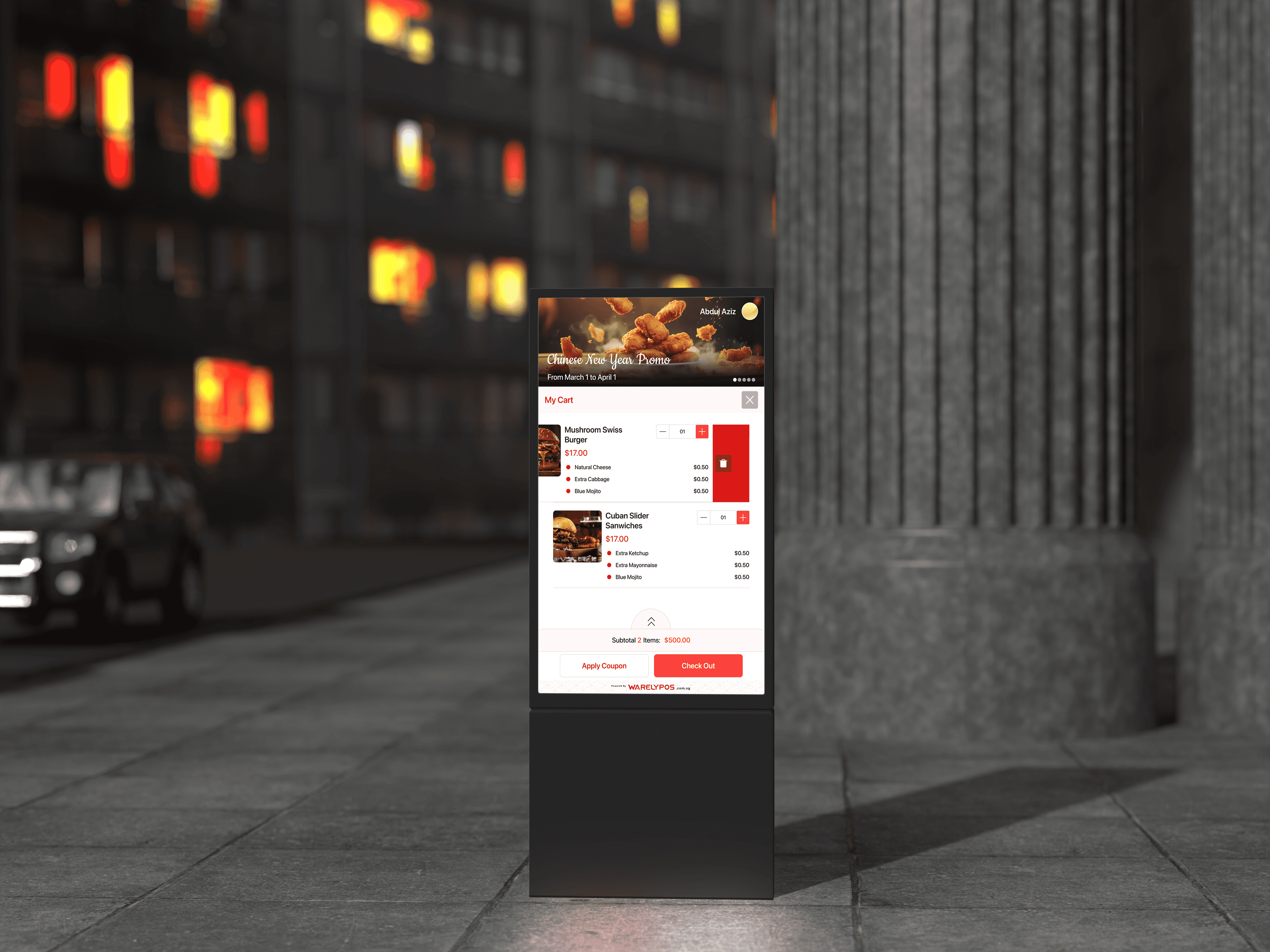
The Self-Service Kiosk Ordering System is a cutting-edge hardware-software solution developed specifically for high-footfall Food & Beverage (F&B) environments. Designed to entirely streamline the customer ordering experience, it empowers users to independently browse appetizing visual menus, customize complex orders, and complete payments without requiring staff assistance. Beyond just reducing queues, the interface acts as a strategic sales tool, utilizing automated up-selling and cross-selling workflows to significantly increase the Average Order Value (AOV) for the business.
The Self-Service Kiosk Ordering System is a cutting-edge hardware-software solution developed specifically for high-footfall Food & Beverage (F&B) environments. Designed to entirely streamline the customer ordering experience, it empowers users to independently browse appetizing visual menus, customize complex orders, and complete payments without requiring staff assistance. Beyond just reducing queues, the interface acts as a strategic sales tool, utilizing automated up-selling and cross-selling workflows to significantly increase the Average Order Value (AOV) for the business.
Platform
Platform
Large-Format Vertical Touchscreen (Kiosk)
Tablet Focused Kiosk
Tools
Tools
Figma
Interactive Prototyping
Micro-interactions
Role
Role
Lead UI/UX Designer
Product Owner
Design System


Warely Technologies
Singapore
Warely Technologies
Singapore
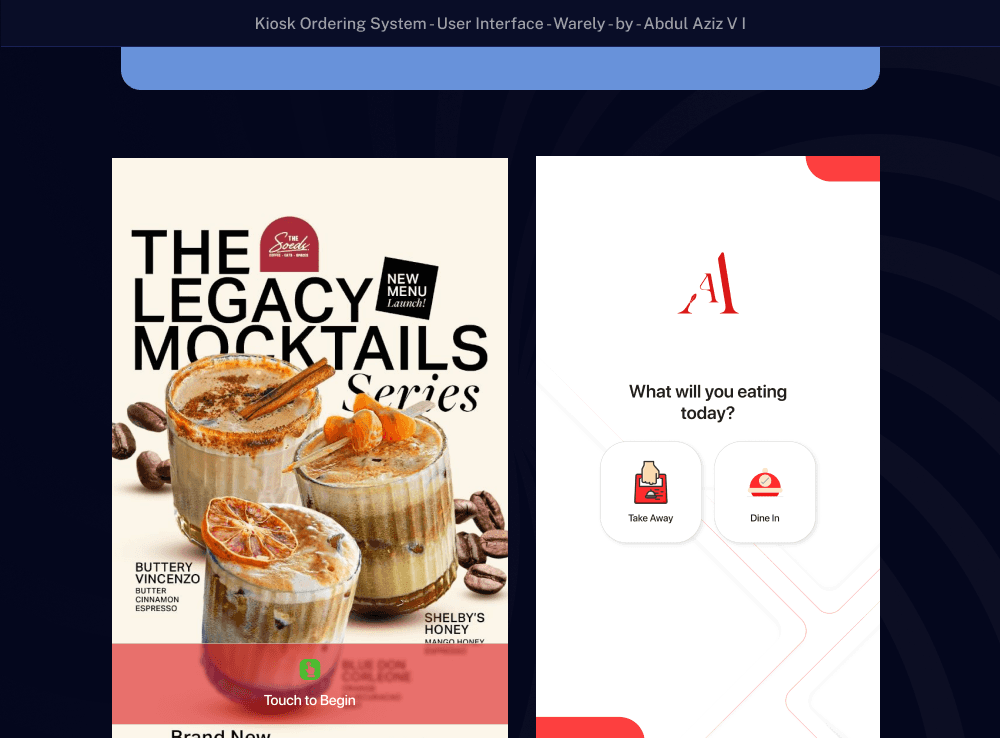
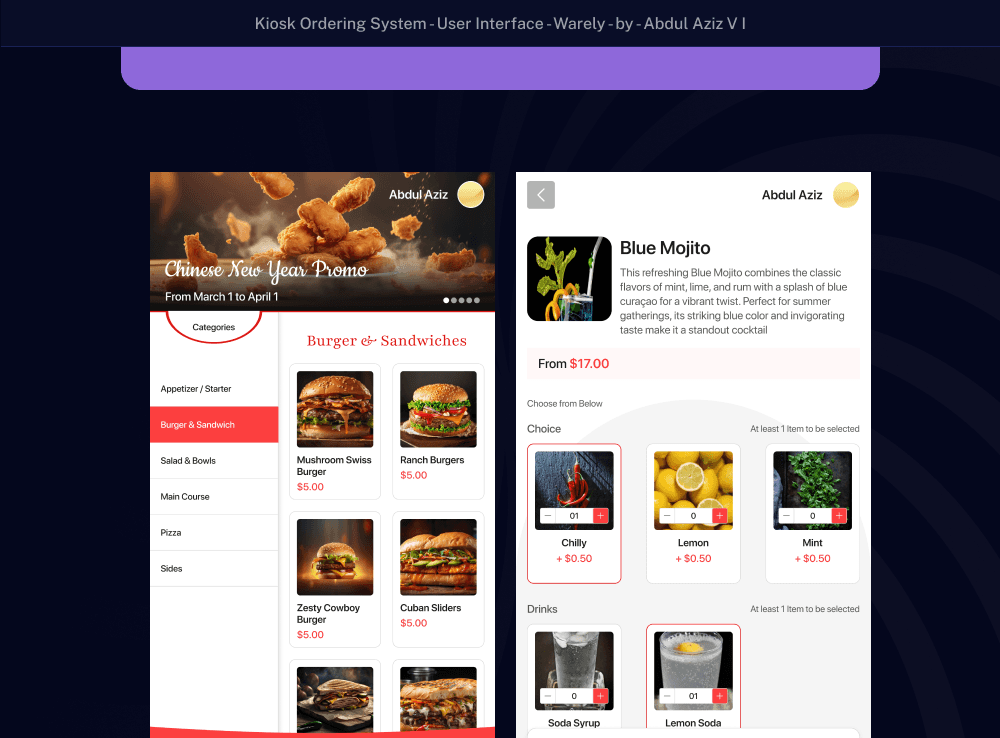
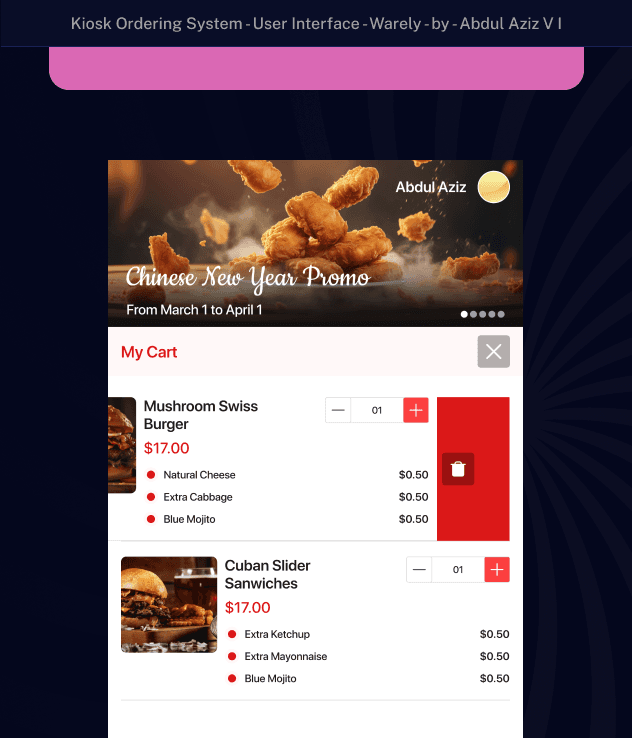
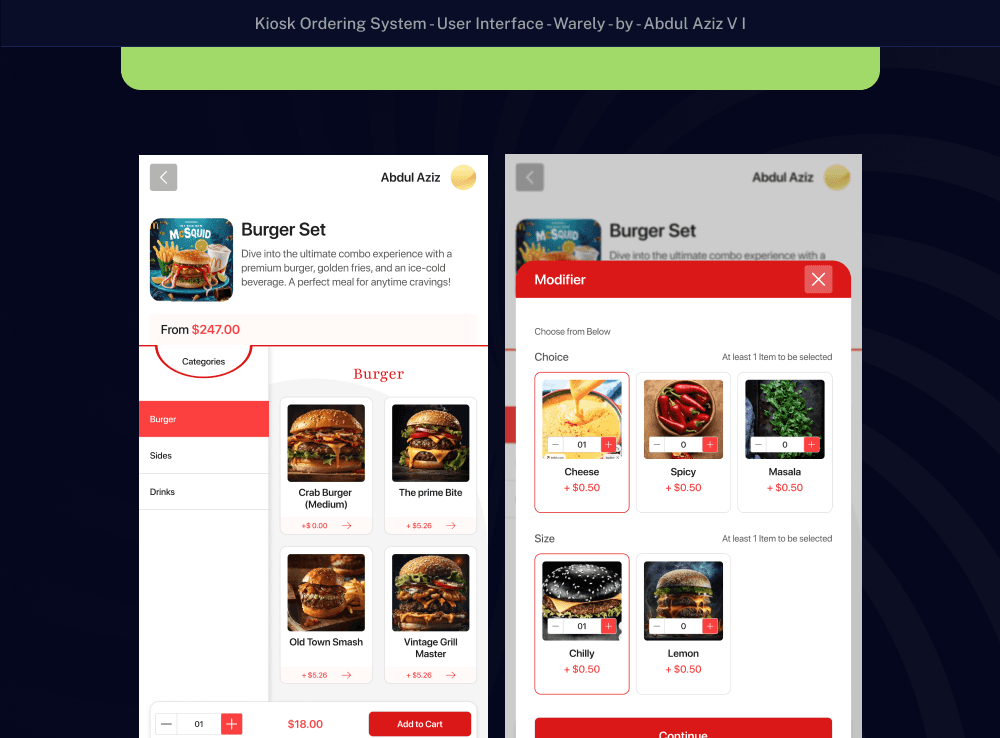
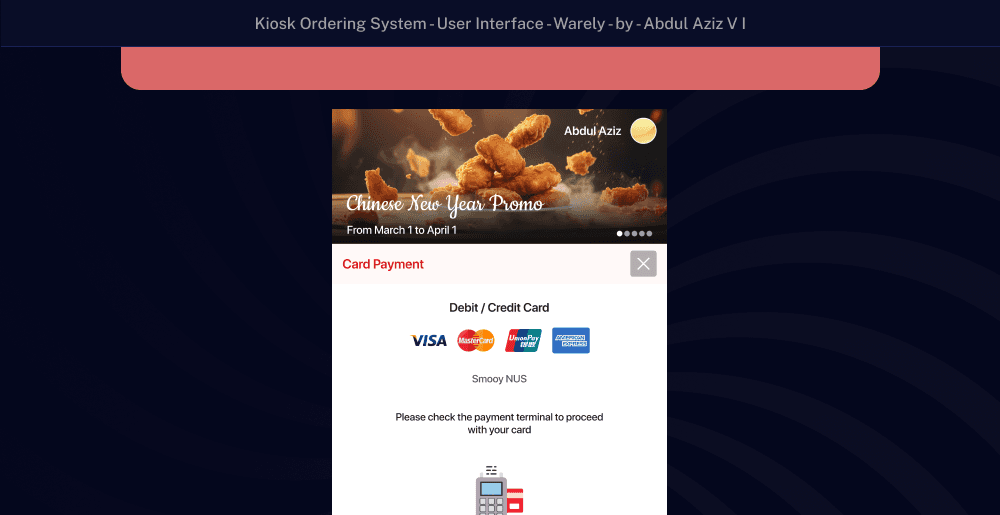
🍔 Visual-First Menu Discovery Leveraging high-resolution imagery and clear, tap-friendly categorization, the interface allows users to seamlessly explore the menu, bridging language barriers in diverse markets like the UAE.
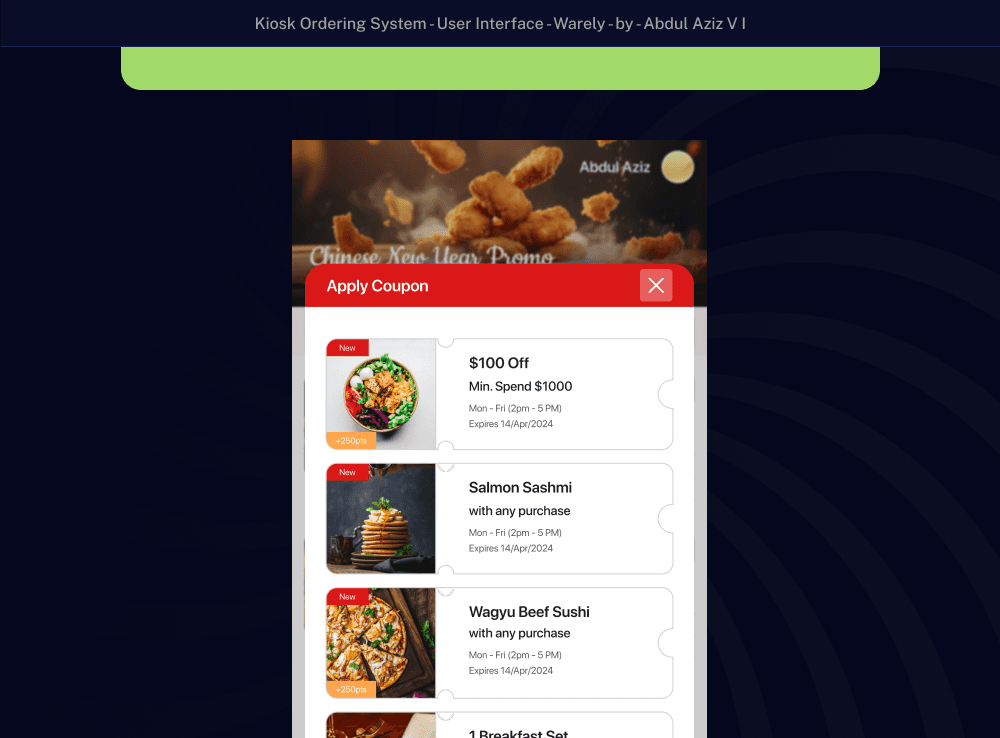
🎯 Smart Upselling Engine The system intelligently prompts users with complementary add-ons (e.g., "Make it a meal" or "Add extra cheese") at the perfect moment in the user flow, driving revenue without feeling intrusive.
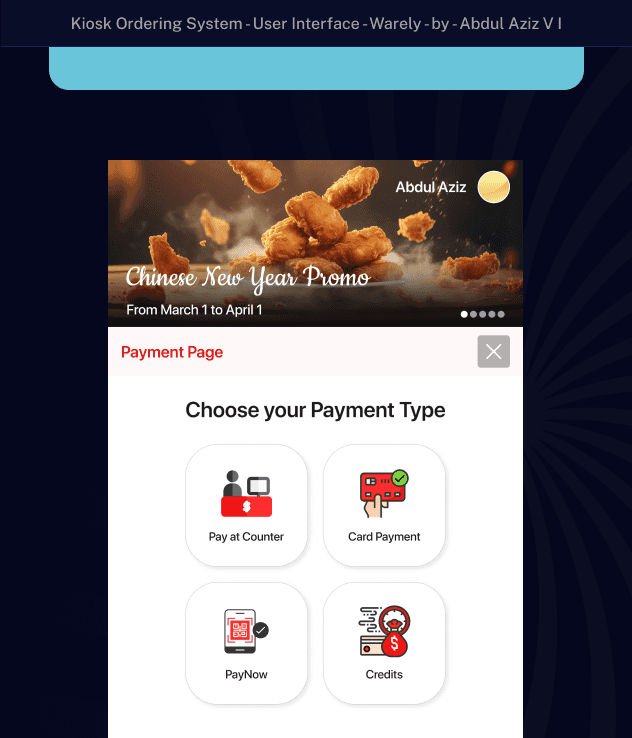
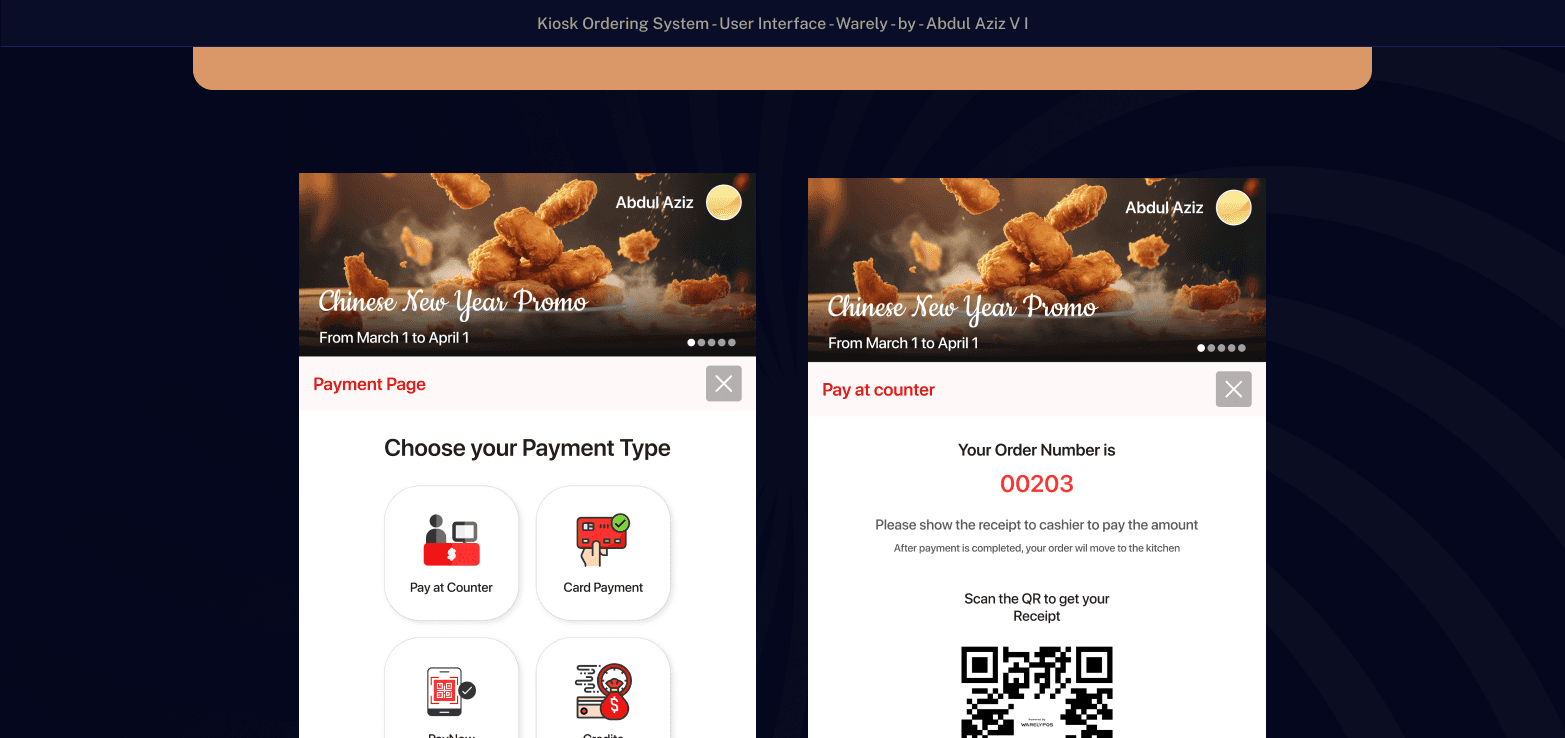
♿ Ergonomic & Accessible UI Designed specifically for large vertical screens, critical navigation and payment actions are positioned in the lower-middle "safe zone" of the screen, ensuring comfortable reachability for users of all heights and physical abilities.
Problem
Statement
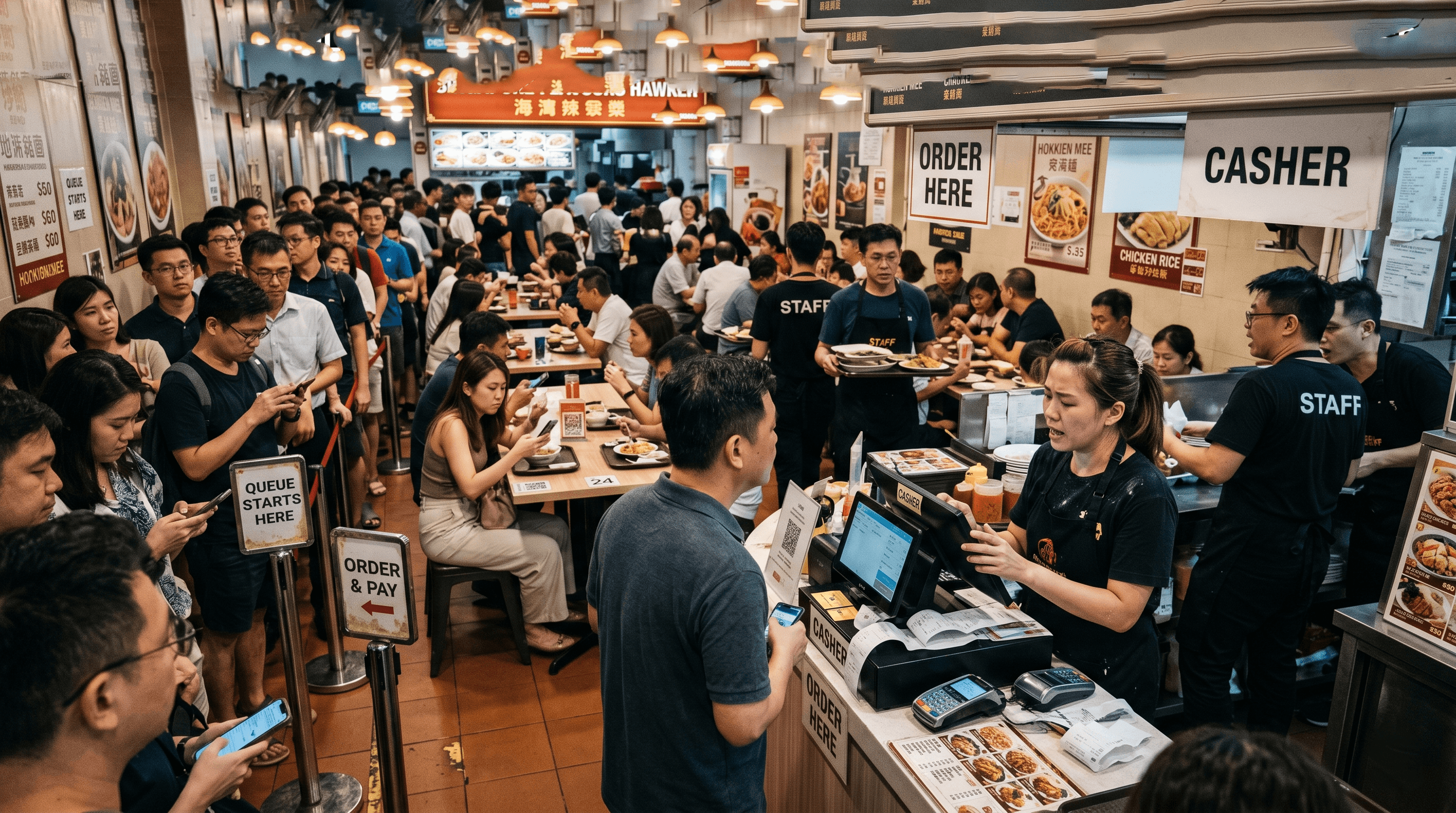
In busy F&B venues, long queues at the cashier directly lead to "queue abandonment" (customers leaving before ordering). Furthermore, human cashiers under pressure often forget to offer upsells, leaving money on the table. For the customer, ordering complex customized meals at a busy counter can feel rushed and stressful, particularly if there is a language barrier. The business needed an automated, consumer-friendly channel to absorb foot traffic, increase order sizes, and guarantee accurate order entry.
Problem
Statement
In busy F&B venues, long queues at the cashier directly lead to "queue abandonment" (customers leaving before ordering). Furthermore, human cashiers under pressure often forget to offer upsells, leaving money on the table. For the customer, ordering complex customized meals at a busy counter can feel rushed and stressful, particularly if there is a language barrier. The business needed an automated, consumer-friendly channel to absorb foot traffic, increase order sizes, and guarantee accurate order entry.
Problem
Statement
In busy F&B venues, long queues at the cashier directly lead to "queue abandonment" (customers leaving before ordering). Furthermore, human cashiers under pressure often forget to offer upsells, leaving money on the table. For the customer, ordering complex customized meals at a busy counter can feel rushed and stressful, particularly if there is a language barrier. The business needed an automated, consumer-friendly channel to absorb foot traffic, increase order sizes, and guarantee accurate order entry.


Solution
Statement
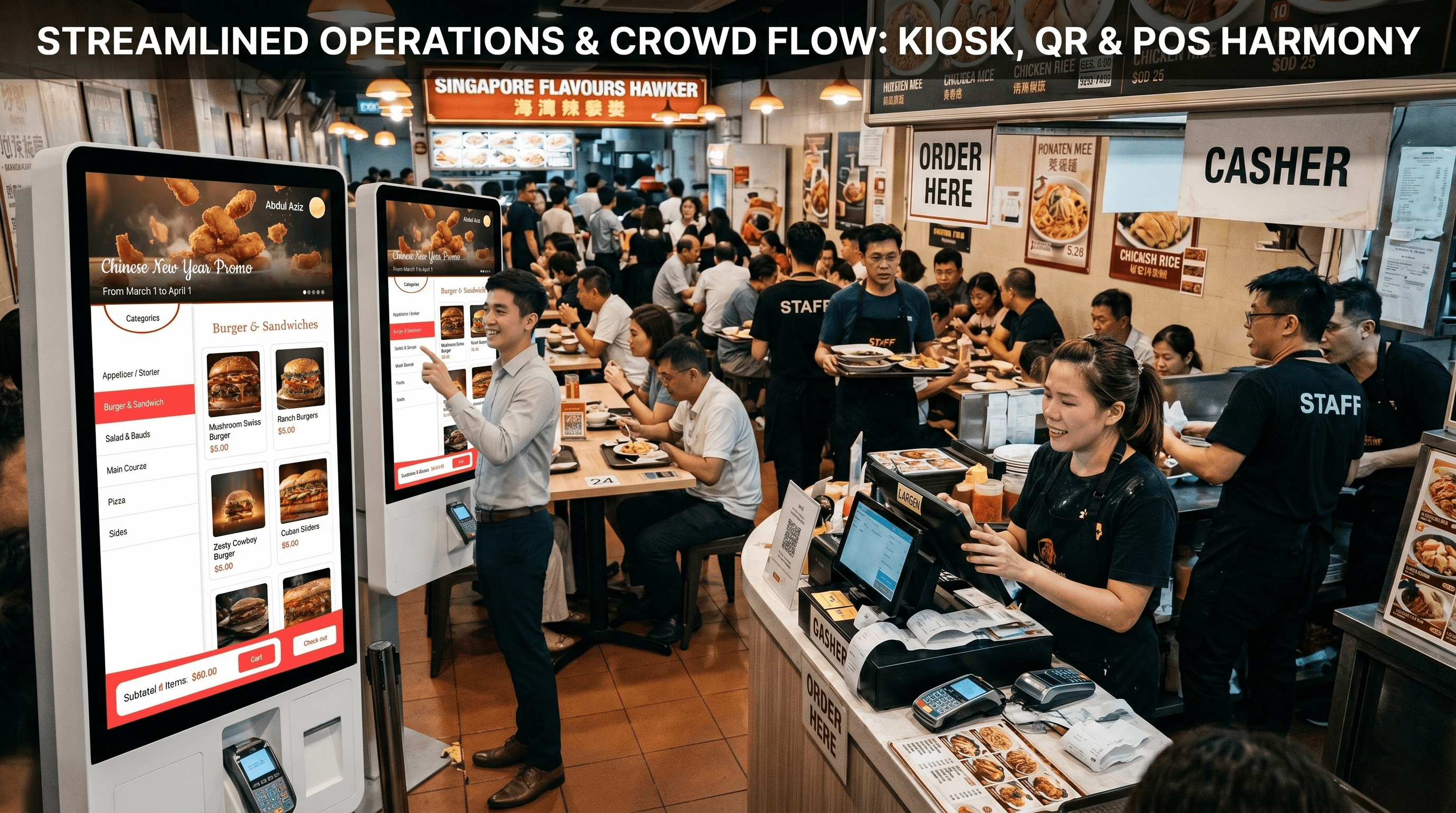
I designed a highly immersive, self-paced kiosk experience. By utilizing a dark/light mode adaptable UI, the screen draws users in while minimizing glare in brightly lit restaurants. I completely re-architected the "Item Customization" flow, changing it from a confusing list into a highly visual, step-by-step journey. By giving customers the freedom to browse and customize at their own pace, and pairing it with frictionless tap-to-pay integration, the kiosk successfully diverted up to 60% of counter traffic while simultaneously boosting the average ticket size.
Solution
Statement
I designed a highly immersive, self-paced kiosk experience. By utilizing a dark/light mode adaptable UI, the screen draws users in while minimizing glare in brightly lit restaurants. I completely re-architected the "Item Customization" flow, changing it from a confusing list into a highly visual, step-by-step journey. By giving customers the freedom to browse and customize at their own pace, and pairing it with frictionless tap-to-pay integration, the kiosk successfully diverted up to 60% of counter traffic while simultaneously boosting the average ticket size.
Competitor
Analysis
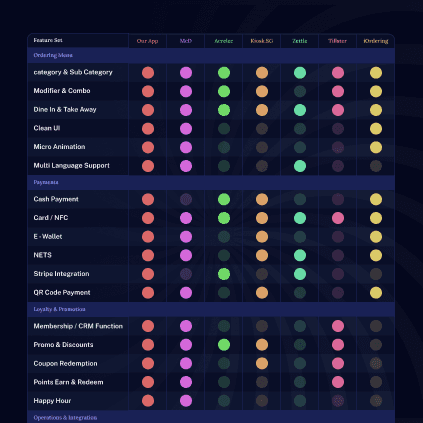
Designing for large screens is vastly different from mobile apps. I audited the kiosks of major global fast-food chains to find critical UX flaws.
Global Fast Food Kiosks (e.g., McDonald's, KFC): Highly effective at upselling, but the user flows are often too long. Users are forced through 4-5 aggressive up-sell screens before they are allowed to pay, causing frustration and bottlenecking the kiosk queue.
Generic White-Label Kiosks: Suffer from poor physical ergonomics. They often place crucial "Back" buttons or "Cart" icons at the very top corners of a 32-inch screen, making them inaccessible for shorter users or those in wheelchairs.
💡 The Strategic Pivot: I designed an "accessible-first" layout. All primary actionable buttons (Checkout, Add to Cart, Next) are anchored to the bottom half of the screen. Furthermore, I condensed the upselling strategy into a single, elegant modal rather than a multi-page hurdle, balancing business goals with user empathy.
Competitor
Analysis
Designing for large screens is vastly different from mobile apps. I audited the kiosks of major global fast-food chains to find critical UX flaws.
Global Fast Food Kiosks (e.g., McDonald's, KFC): Highly effective at upselling, but the user flows are often too long. Users are forced through 4-5 aggressive up-sell screens before they are allowed to pay, causing frustration and bottlenecking the kiosk queue.
Generic White-Label Kiosks: Suffer from poor physical ergonomics. They often place crucial "Back" buttons or "Cart" icons at the very top corners of a 32-inch screen, making them inaccessible for shorter users or those in wheelchairs.
💡 The Strategic Pivot: I designed an "accessible-first" layout. All primary actionable buttons (Checkout, Add to Cart, Next) are anchored to the bottom half of the screen. Furthermore, I condensed the upselling strategy into a single, elegant modal rather than a multi-page hurdle, balancing business goals with user empathy.
User
Persona
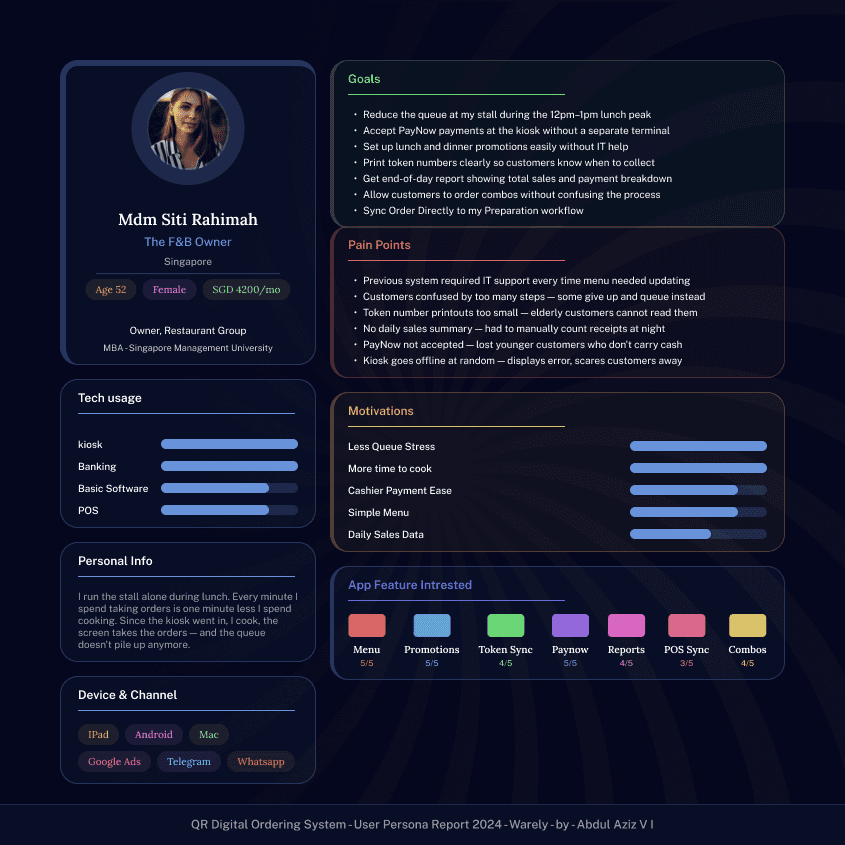
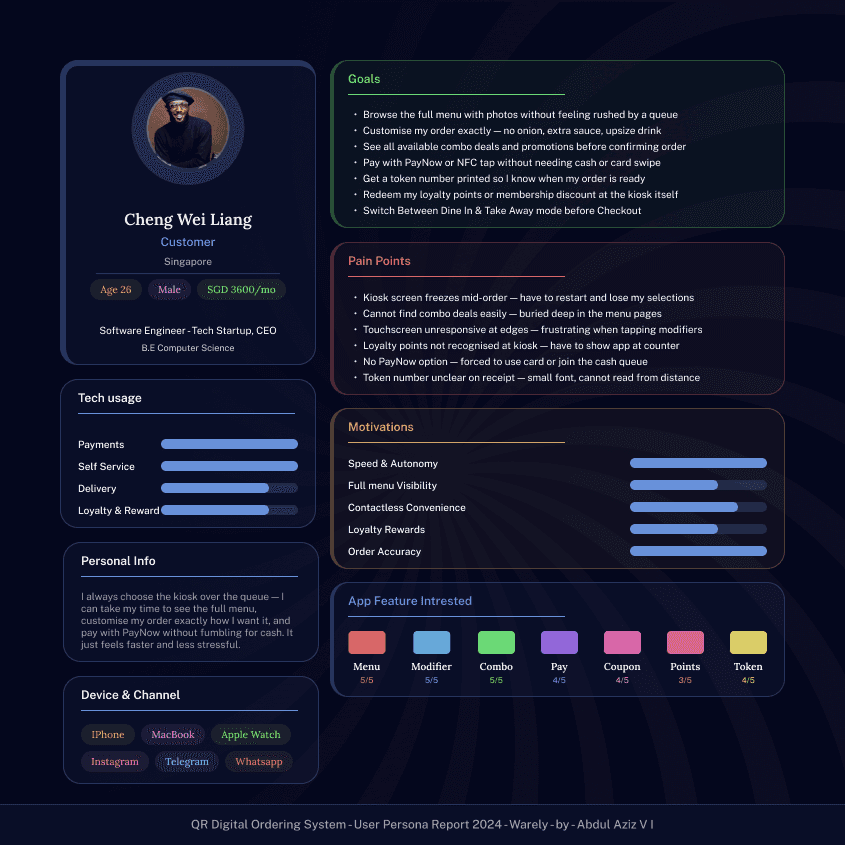
To design the perfect flow, I focused on the psychology of a customer who is hungry, potentially distracted, and looking for convenience.

UI Gallery

Let’s Build Something
Meaningful Together
Currently based in Dubai and open to UI/UX and Product Design roles. If you're looking for a designer who understands complex systems, business goals, and frontend logic—let's talk.
Let’s Build Something
Meaningful Together
Currently based in Dubai and open to UI/UX and Product Design roles. If you're looking for a designer who understands complex systems, business goals, and frontend logic—let's talk.
Let’s Build Something
Meaningful Together
Currently based in Dubai and open to UI/UX and Product Design roles. If you're looking for a designer who understands complex systems, business goals, and frontend logic—let's talk.

A product-focused UI/UX Designer bridging the gap between research, design, and React-friendly architecture.


Copyright ©2026 Abdul Aziz - Designed by Abdul Aziz

A product-focused UI/UX Designer bridging the gap between research, design, and React-friendly architecture.
Copyright ©2026 Abdul Aziz - Designed by Abdul Aziz
A product-focused UI/UX Designer bridging the gap between research, design, and React-friendly architecture.
Copyright ©2026 Abdul Aziz - Designed by Abdul Aziz